
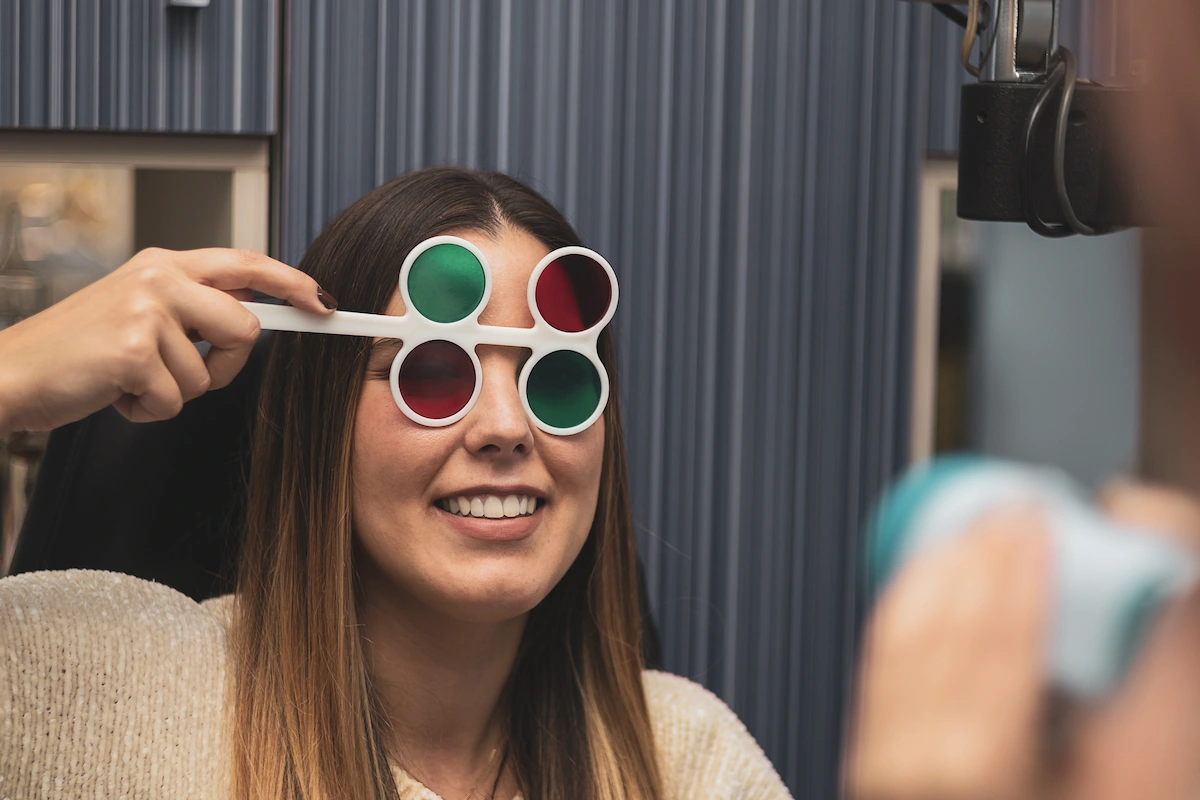
No, vision therapy is not just for children. While it can help kids strengthen visual skills that support reading and learning, adults can also benefit when their eyes have trouble working together, focusing, tracking, or processing visual information.
Glasses and contact lenses help correct clarity, but vision therapy focuses on how the eyes and brain work as a team. Our programs are customized for each patient’s goals, whether those goals involve school, work, daily comfort, recovery, or athletics.
Why might an adult need vision therapy?
Visual skills are used throughout the day, not only in the classroom. Adults may notice challenges during computer work, reading, driving, or activities that require quick reactions and accurate depth perception.
Symptoms worth discussing with an eye doctor
An adult may benefit from an evaluation if they experience:
- Eye strain or fatigue during near work
- Headaches after reading or screen use
- Difficulty concentrating on visual tasks
- Words that seem to move, blur, or double
- Trouble judging distance or navigating busy environments
- Reduced hand-eye coordination
- Difficulty shifting focus between near and far objects
These symptoms can have several possible causes. A comprehensive eye exam can help determine whether a vision-related issue may be contributing.
How can vision therapy help adults?
Vision therapy is a personalized program of in-office sessions and at-home activities designed to improve specific visual abilities. Depending on the patient’s needs, therapy may focus on:
- Eye tracking and focusing
- Eye teaming and coordination
- Depth perception
- Visual memory and processing
- Visual-motor integration
- Applying visual skills to everyday tasks
With us, therapy progresses through three phases: building foundational visual abilities, making those skills more automatic, and applying them to real-life activities. This structured approach helps keep treatment relevant to the individual.
What is the connection to binocular vision?
Sometimes, persistent visual discomfort occurs because the eyes are not aligning or working together efficiently. Binocular vision dysfunction can contribute to headaches, dizziness, eye strain, blurry or double vision, and difficulty with reading or computer use.
Vision therapy may be one recommendation for improving eye coordination in appropriate cases. Because double vision can result from several eye or health concerns, it is important to schedule an eye evaluation when it is new, persistent, or worsening.
Vision therapy is different from simply updating glasses
A new prescription can sharpen vision, but it may not address how efficiently the eyes track, focus, coordinate, or process what they see. During an evaluation, our team can assess the visual skills that matter most to a patient’s symptoms and daily demands.
Adults can also build visual skills for sports
Visual performance matters beyond the office and home. Adult athletes may want to improve visual reaction time, peripheral awareness, hand-eye coordination, or their ability to track fast-moving objects. Sports vision training is tailored to the visual demands of an athlete’s sport and performance goals.
Build stronger visual skills at any age
Whether visual challenges began in childhood or have become more noticeable as an adult, it is never too late to ask questions about how your eyes work together. Dr. Robyn Dragoo and the team provide personalized care for children and adults with functional vision concerns.
Schedule an appointment to discuss your symptoms and find out whether vision therapy may be a good fit for your goals.